Audit log
Open Audit Log to review who changed desired state or started an operational task. The page is read-only and is intended for investigation and change review.
Interface overview
This verified appliance view provides visual orientation before you begin.
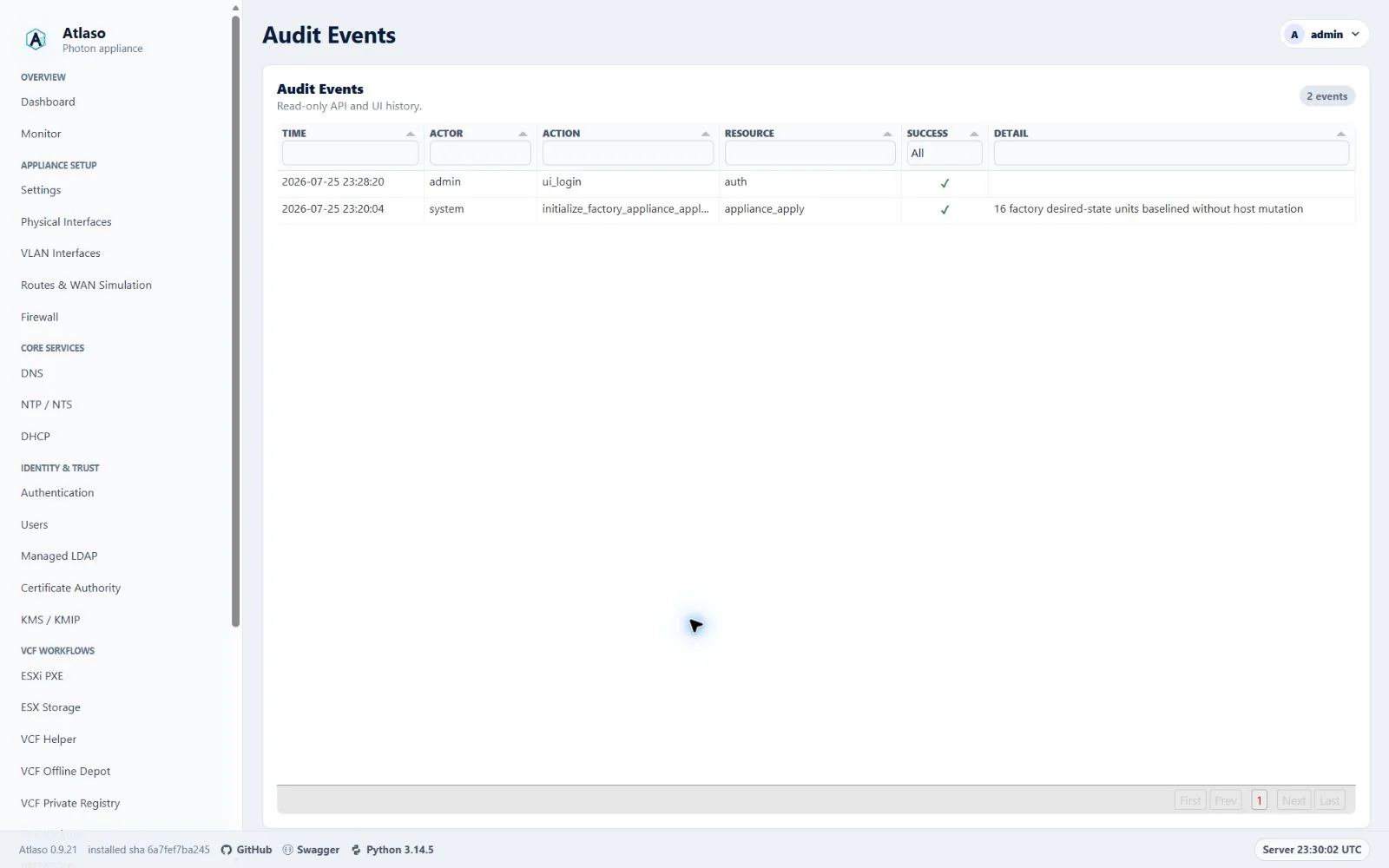
Figure: Audit Events in the verified clean-appliance desktop state.
Review an event
- Filter the grid by actor, action, resource, or time.
- Open the relevant event and compare its timestamp with related entries on Tasks.
- Confirm that the actor and affected resource match the intended change.
Audit entries describe the action and sanitized result. They must not expose passwords, private keys, authenticated URLs, or other secret-bearing values.
IP addresses, MAC addresses, hostnames, and account names are not sensitive by themselves in Atlaso and may remain in an audit event when they identify the affected resource. Passwords, tokens, authenticated URLs, session material, private keys, password hashes, credential verifiers, and other secret-bearing data remain sensitive. Content-integrity hashes of non-secret material and one-way change-detection hashes of encrypted-at-rest ciphertext do not. An identifier must also be treated as sensitive when it is embedded in or paired with authentication or cryptographic material.
Verify and escalate
For an appliance apply or maintenance action, correlate the event with the task identifier and terminal task state. Use Operational logs for runtime diagnostics. Preserve the relevant timestamps and identifiers when escalating; do not copy credentials or raw secrets into an issue. The data classification does not make authenticated audit history public or override site handling policy.
Additional verified states
These captures show responsive layouts and useful operational states referenced by this page.
Audit events
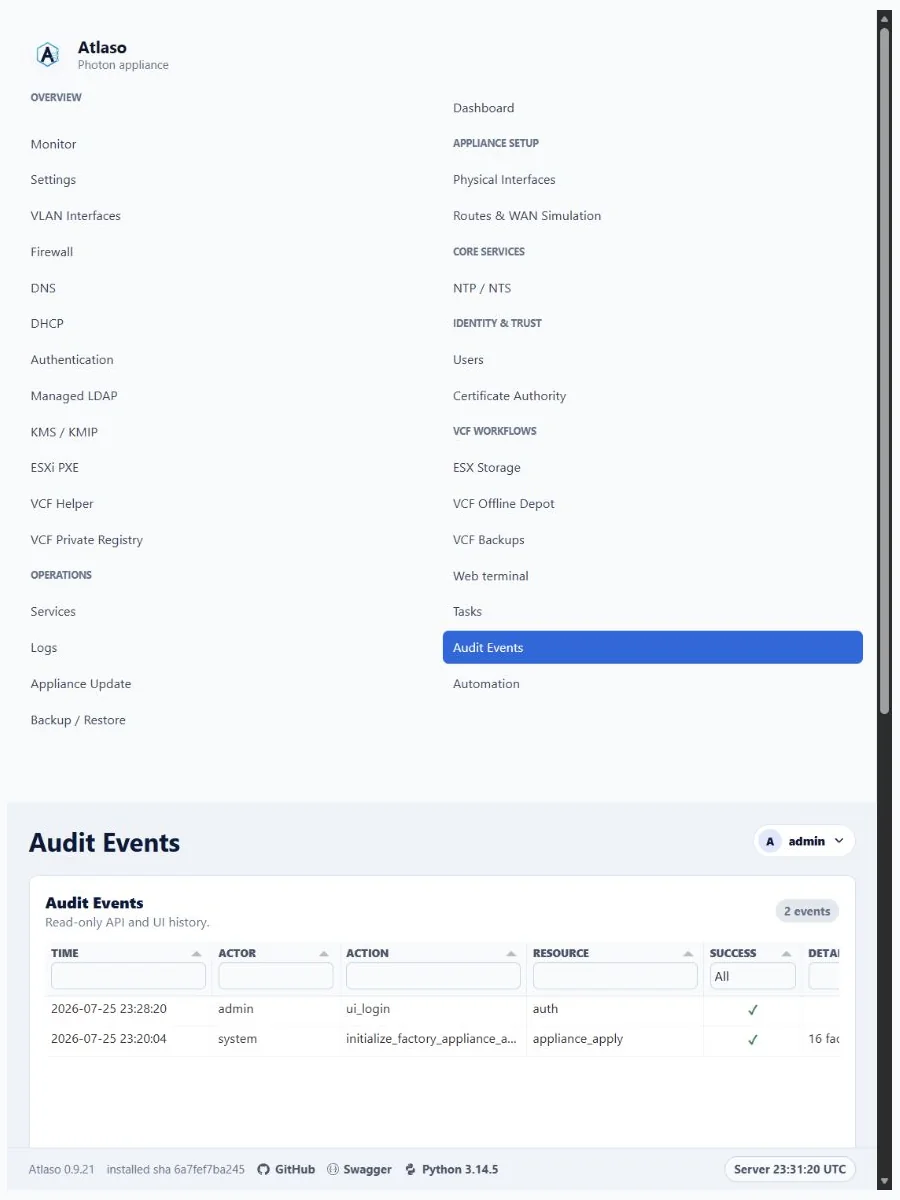
Figure: Audit Events in the verified clean-appliance responsive state.