DHCP
Open DHCP to manage scope and reservation desired state rendered into the shared dnsmasq apply unit.
Interface overview
This verified appliance view provides visual orientation before you begin.
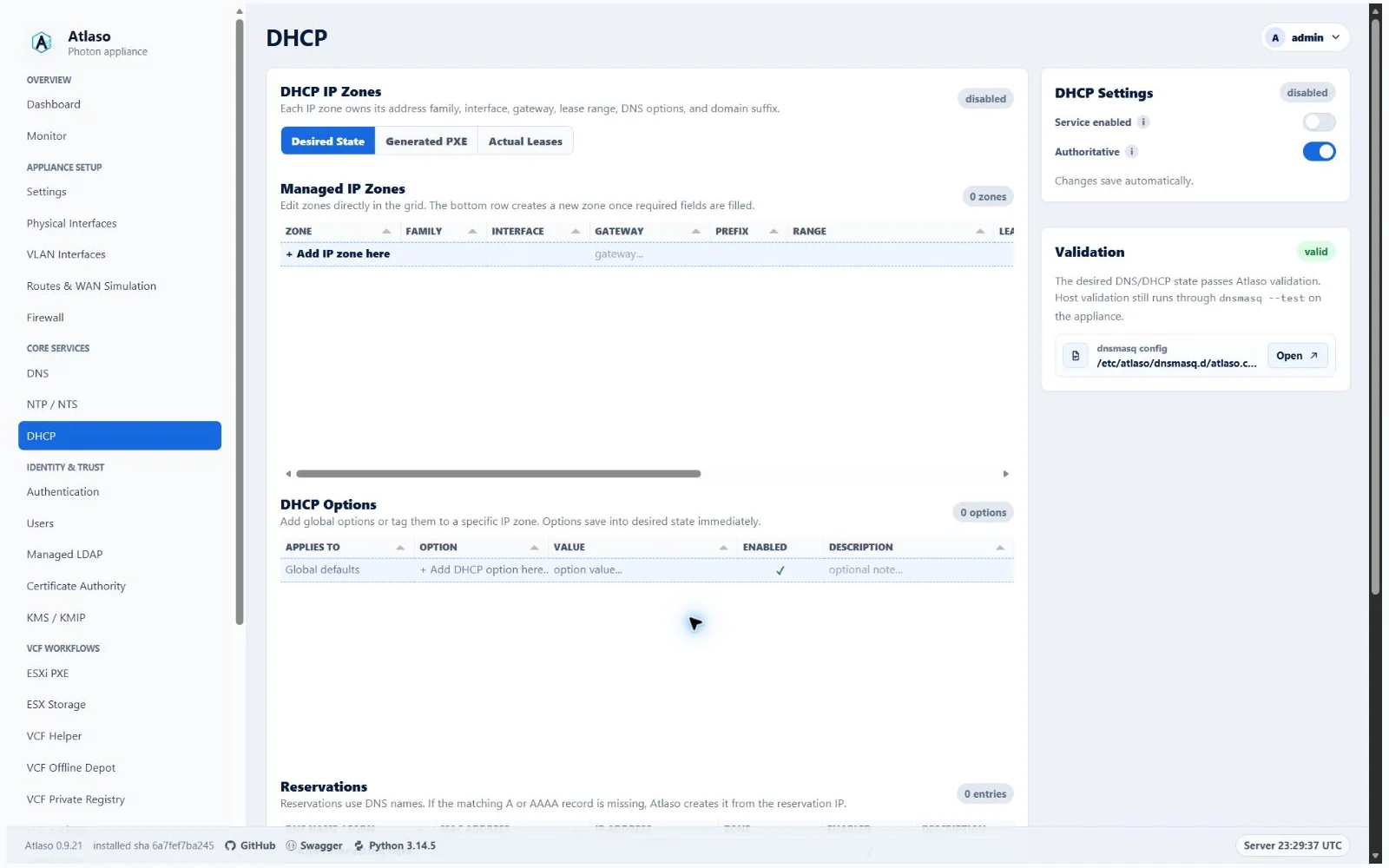
Figure: DHCP in the verified clean-appliance desktop state.
Configure a scope
- Select Add IP zone here and use the five-step guided workflow.
- Select the interface that owns the client network and record the multiline zone description on its own identity row.
- Confirm the lease range Atlaso derives from the gateway and prefix, or replace it with another valid, non-overlapping range.
- Configure the visually framed Lease time group as a positive whole-number duration with an explicit Minutes, Hours, or Days unit, then set the aligned DNS, NTP, and domain options and choose the zone's desired enablement in its dedicated step. Existing lease strings outside those supported units remain unchanged until the operator supplies a supported duration and unit.
- Add reservations with unique client identity and address values.
- Resolve Validation-card errors and inspect the rendered dnsmasq preview.
- Submit
DNS/DHCP (dnsmasq)through Appliance Apply.
Changing a scope does not serve leases until the global apply task succeeds. Interface changes also affect generated firewall bootstrap rules, so confirm the intended bind target in the review. Existing zones can be enabled or disabled directly from the grid without reopening the wizard.
Select Add DHCP option here to choose Global defaults or a specific IP zone, enter the option code and value, set enablement, and review the desired state. Existing option enablement remains directly editable in the grid.
Verify
Confirm the task succeeded, dnsmasq is healthy, and a test client on the selected network receives the expected lease
and options. Roll back by restoring the previous desired state and submitting a new global apply.
Transport ownership
The management DHCP transports and their API v1 counterparts are owned by the dedicated dns_dhcp domain
routers. The stable UI and API facade modules continue to aggregate and export those handlers. This internal ownership
split does not change any path, method, permission, response, desired-state behavior, dnsmasq rendering, or the global
Appliance Apply boundary described above.
Additional verified states
These captures show responsive layouts and useful operational states referenced by this page.
DHCP
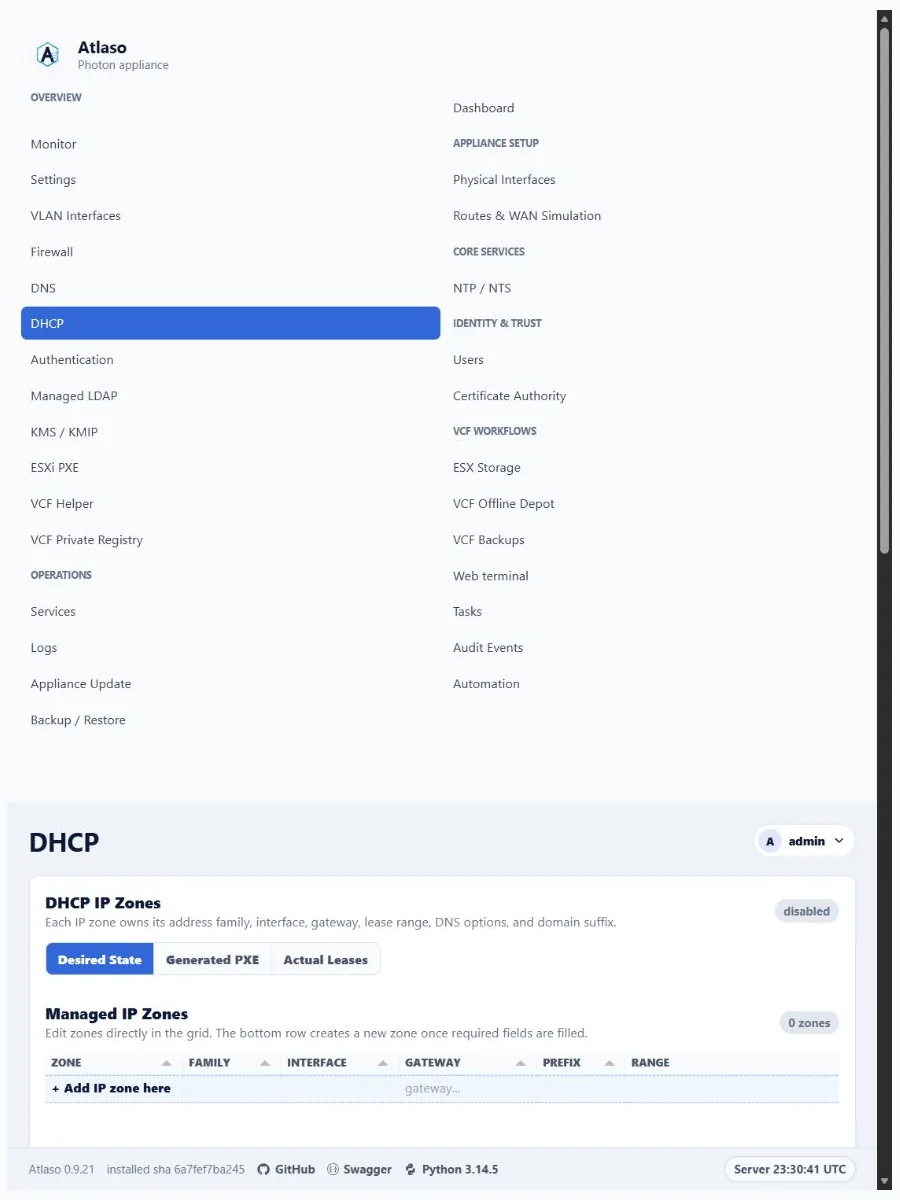
Figure: DHCP in the verified clean-appliance responsive state.
Dhcp: Ip Zone Services
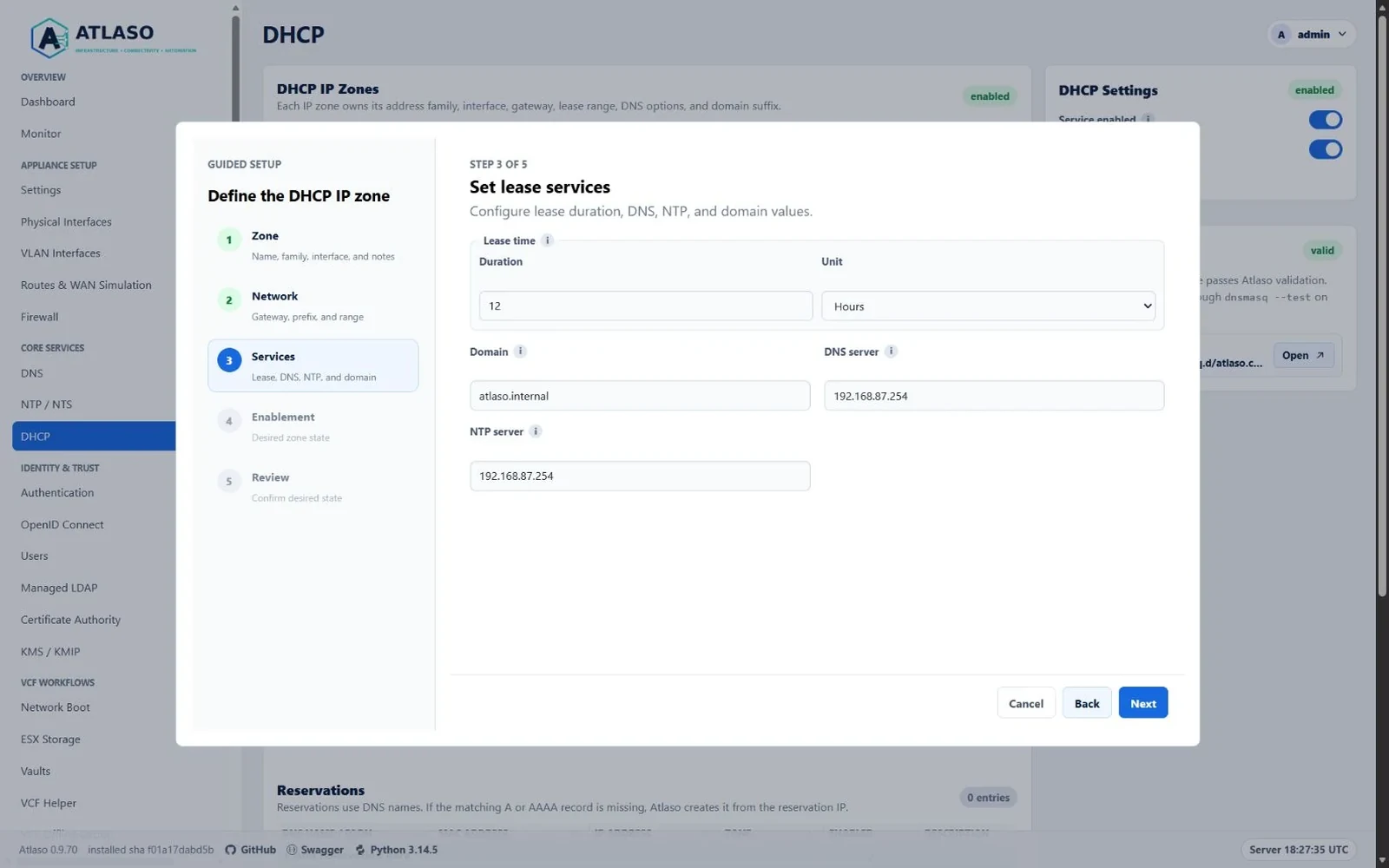
Figure: DHCP IP zone Services step with aligned service fields and a framed Lease time group.
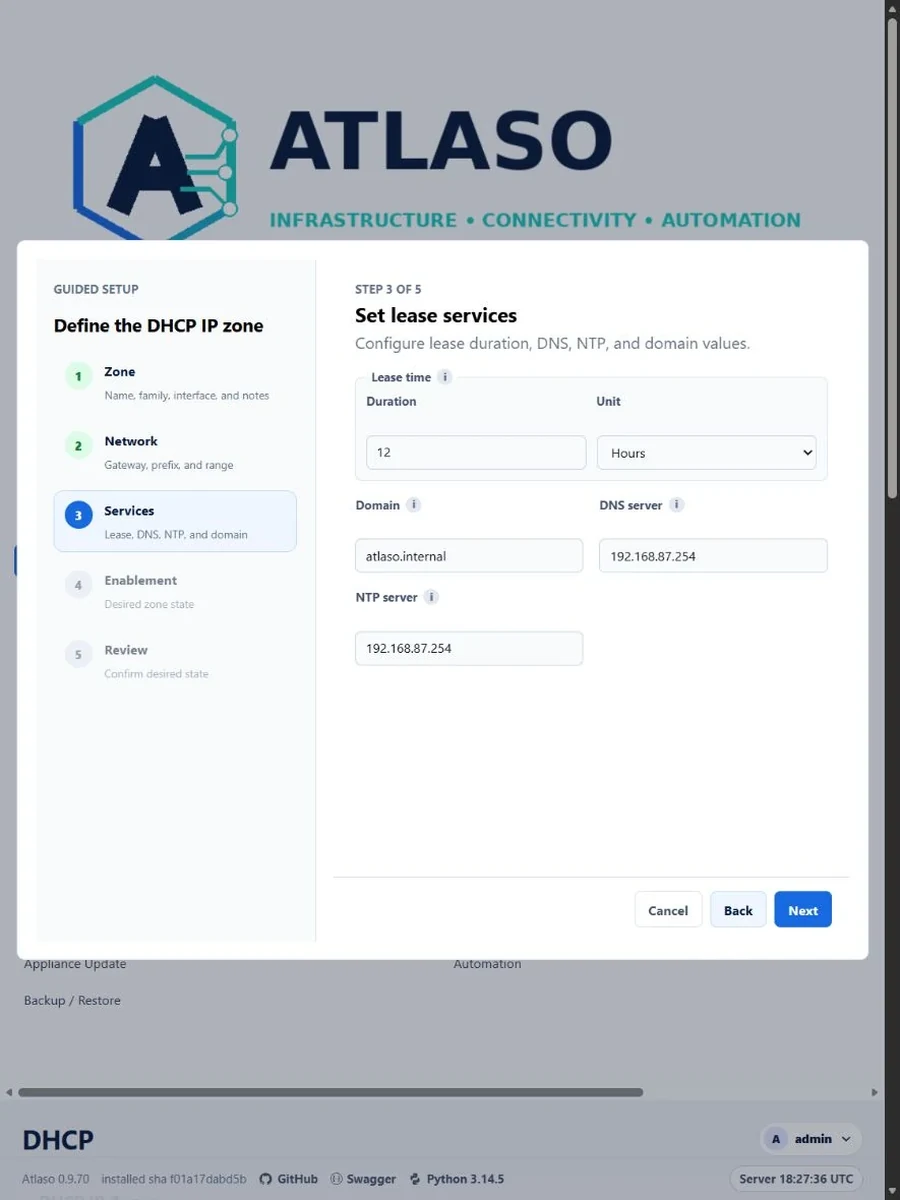
Figure: DHCP IP zone Services step in the verified narrow viewport.