API reference
Open /api/docs on an Atlaso appliance for the interactive Swagger interface or /api/redoc for ReDoc. The
machine-readable schema is available at /openapi.json and is also the canonical application-readiness endpoint. Only
the supported /api/v1 REST contract appears in these interfaces.
Interface overview
This verified appliance view provides visual orientation before you begin.
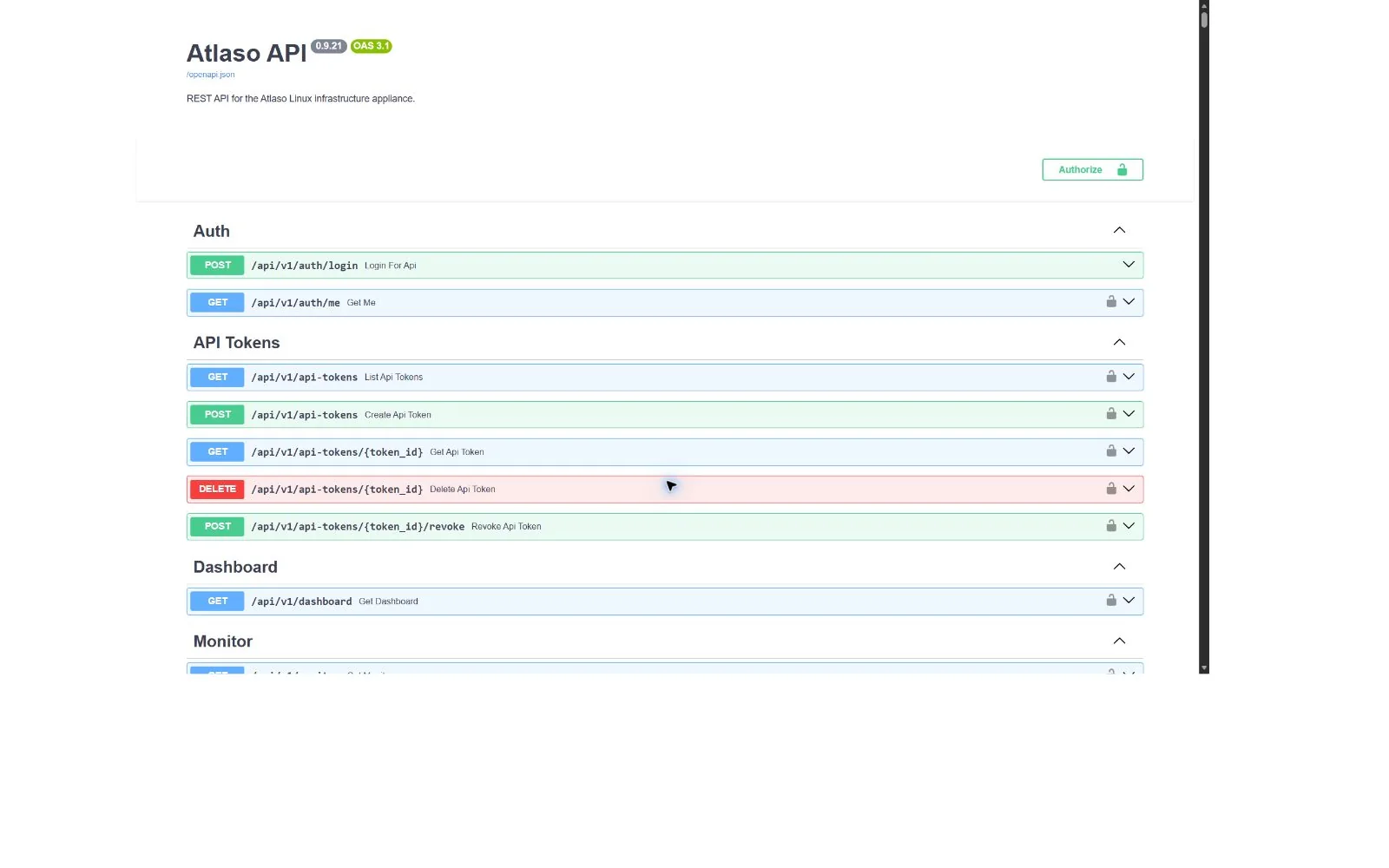
Figure: Swagger API reference in the verified clean-appliance desktop state.
For token creation, safe command examples, scopes, errors, request IDs, locking, and mutation boundaries, start with Use the Atlaso API. This page remains the generated-contract reference.
Use the interface
- Select an operation and inspect its parameters, request schema, responses, and required authorization.
- Authenticate with an appropriately scoped API token when the operation requires it.
- Use example or RFC 1918 values in documentation and test evidence.
- Verify the response status and schema; do not infer success from network reachability alone.
Never paste production tokens, passwords, private keys, or authenticated URLs into screenshots or public issues.
Identify the appliance version
Send an unauthenticated GET request to /api/v1/version through the management front door to identify the installed
Atlaso build. The response contains the installed version, its base_version, the full source git_commit, and the
UTC built_at timestamp. Source checkouts and development wheels return an empty string when commit or build-time
metadata is unavailable. These values come only from package metadata embedded during the build; the request does not
inspect a runtime Git checkout.
This operation intentionally omits host-platform diagnostics and does not make management API routes available through additional Public Services listeners.
Compatibility
Treat the published OpenAPI schema as a compatibility surface. Additive fields should preserve existing consumers, and behavior changes require synchronized operator documentation, tests, and media ownership. For broader implementation details, see the full technical reference.
OIDC /identity, Network Boot /pxe, Web Terminal, and browser routes are intentionally absent from Swagger. Their
runtime protocols remain supported and are documented in the corresponding service and operator guides.
Human browser pages are separately owned by /ui/management and /ui/public; see
Public Services. This namespace change does not move /api/v1, /openapi.json,
/api/docs, /api/redoc, or any service protocol route.
Additional verified states
These captures show responsive layouts and useful operational states referenced by this page.
API reference
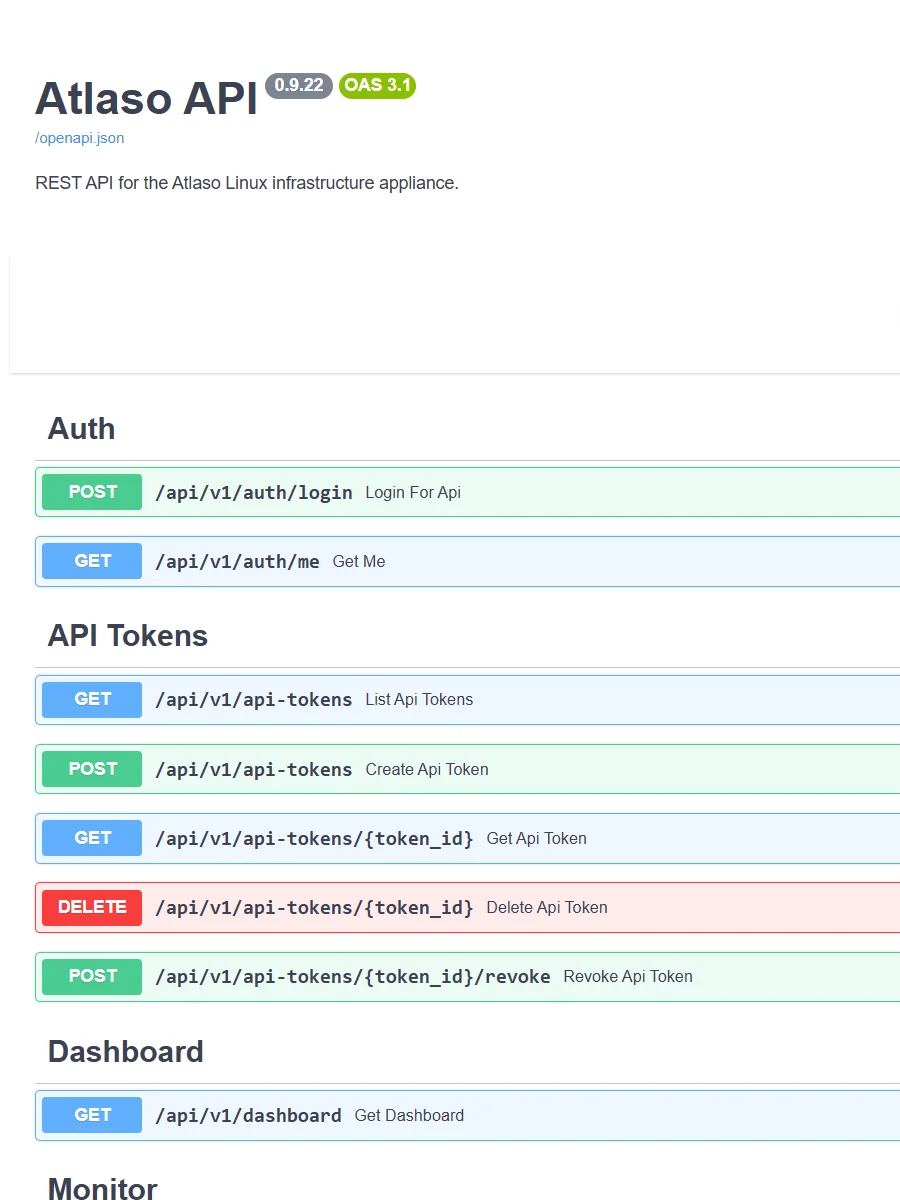
Figure: Swagger API reference in the verified clean-appliance responsive state.